Dynamic assessment
Scenario-based evaluation
Structured reasoning measurement
Trust erosion in degrees
AI in higher education
Academic integrity
Assessment redesign
Certification reform
Competency-based credentialing
Reflections on AI and cognition
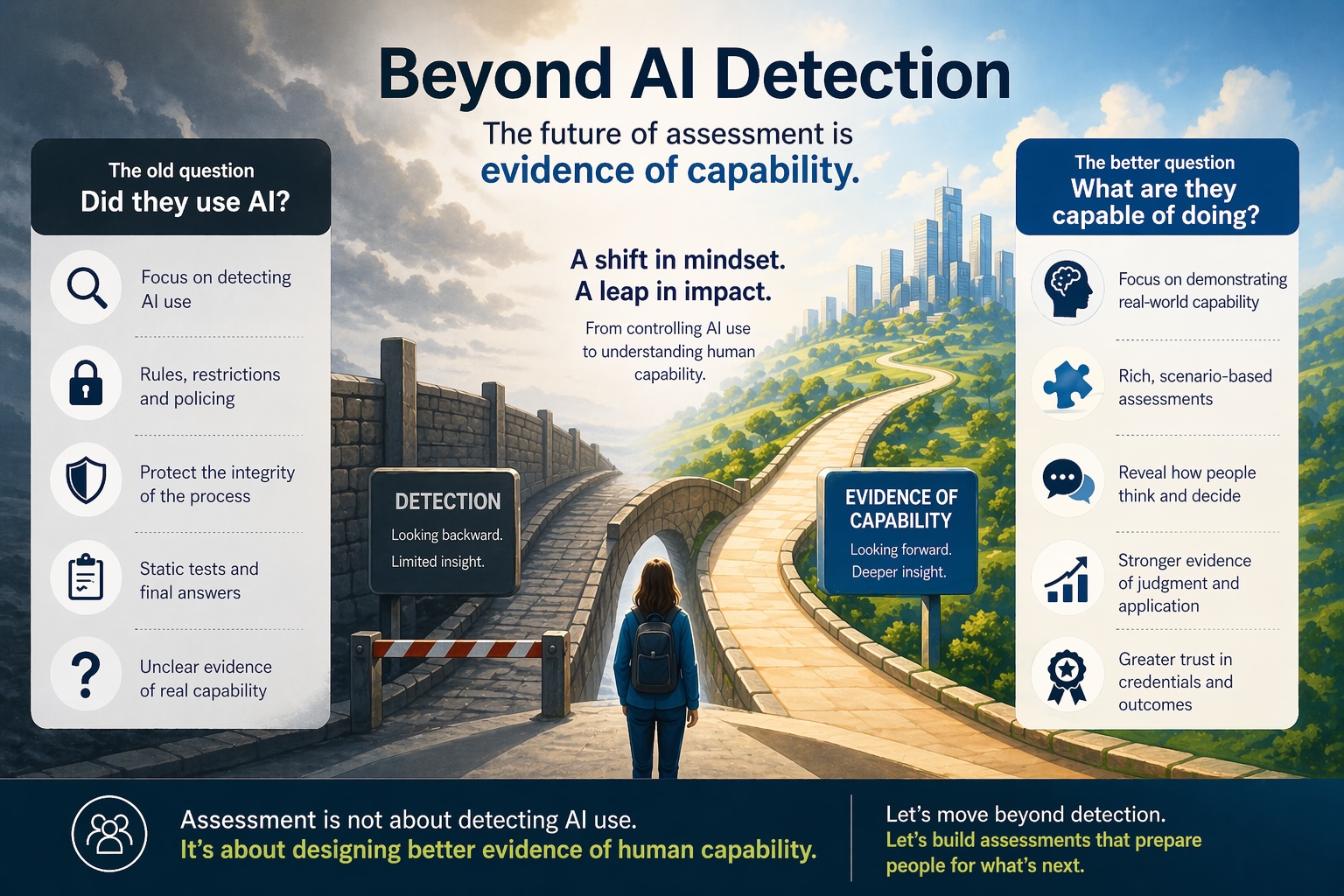
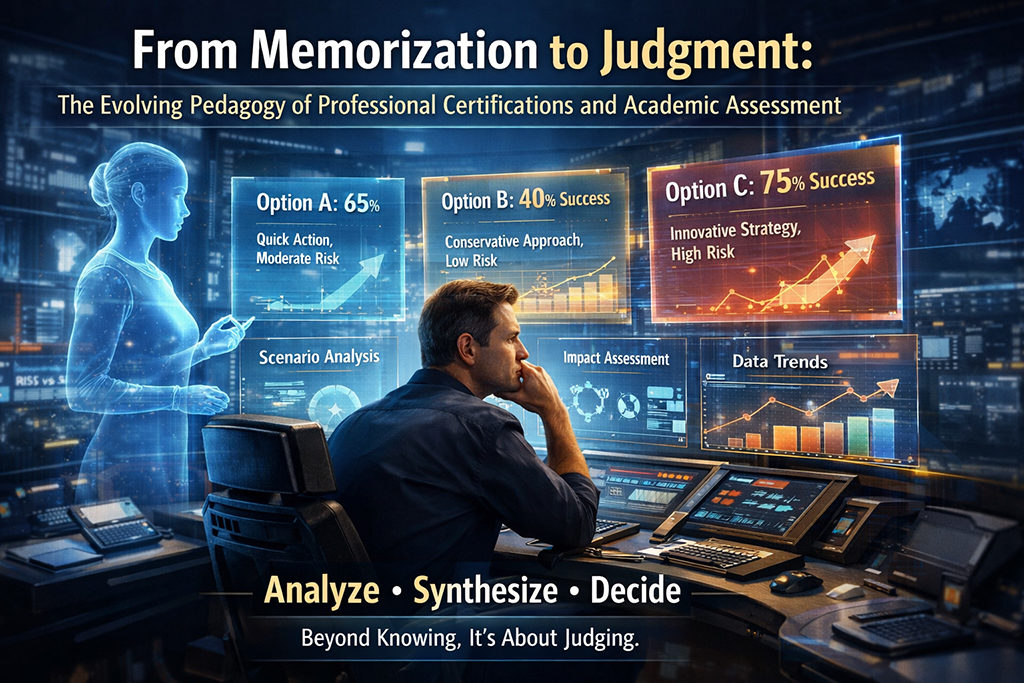
Professional certifications and academic assessments have historically focused on knowledge recall, often through MCQs that can reward test-taking tactics and even introduce an element of chance. In an AI-rich world where information is instantly accessible and easily contextualized, memorization is no longer a strong signal of competence. What matters now is judgment: the ability to analyze, contextualize, validate, and apply knowledge in real situations.
Using the Kirkpatrick model, most traditional exams sit at Level 2 (Learning), while real competence must be demonstrated at Level 3 (Behavior) and Level 4 (Results), with some approaches extending to ROI. This is the shift N2X Labs is built for: open-text, reasoning-based assessments and AI-supported scenarios that better measure applied competence, not just recall.
Structured reasoning
Dynamic assessment
Credentialing reform
Assessment infrastructure
Competency measurement
Higher education
Professional certification
Academic integrity
Adaptive learning
Scenario-based evaluation
Assessment innovation
Future of education
Feb 22, 2026